34+
Years of Experience
40%+
Fortune 100 clients
60k+
Students Trained
7
SPCTs, incl. 2 SAFe Fellows
What Is a Value Stream Diagnostic?
A value stream diagnostic traces one business outcome from idea to delivered value and measures where work waits, loops back, or gets stuck. ICON's version goes past mapping: it identifies the constraint causing the delay, redesigns the part of the operating model responsible, and measures the economic value released.
Signs You Need One
- Delivery dates slip even though every team reports being busy.
- AI or automation sped up one step, and nothing downstream got faster.
- Leadership can't say where last quarter's capacity went.
What a Value Stream Diagnostic Includes
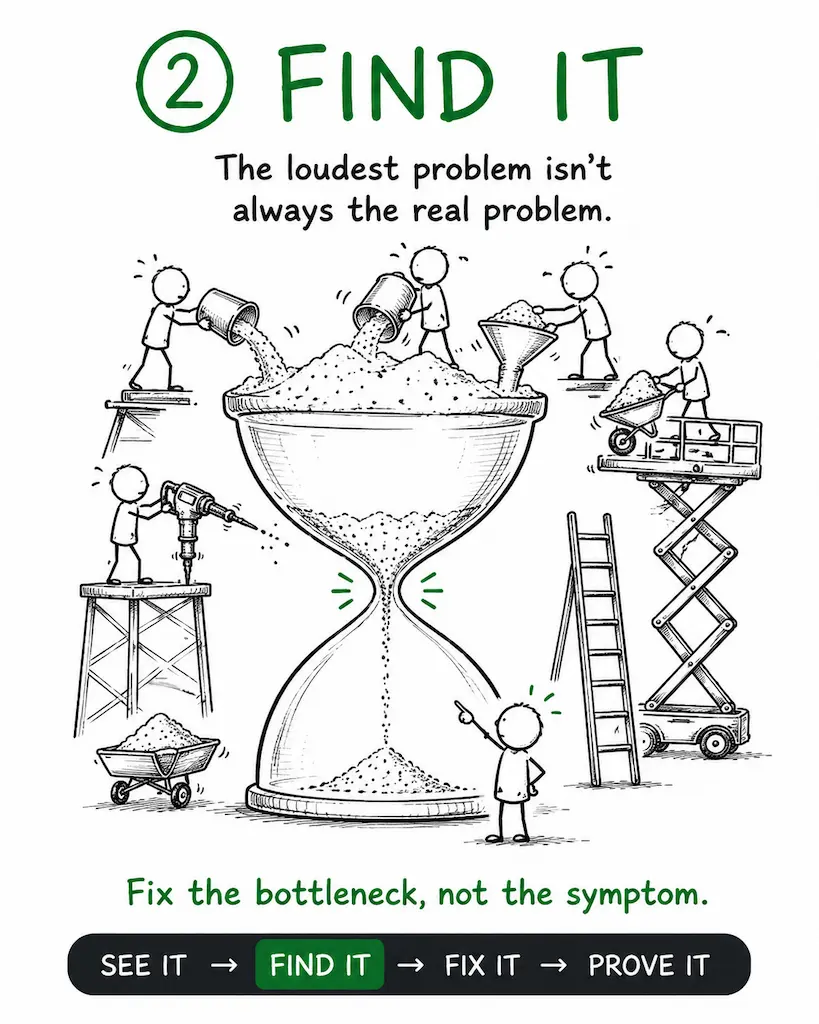
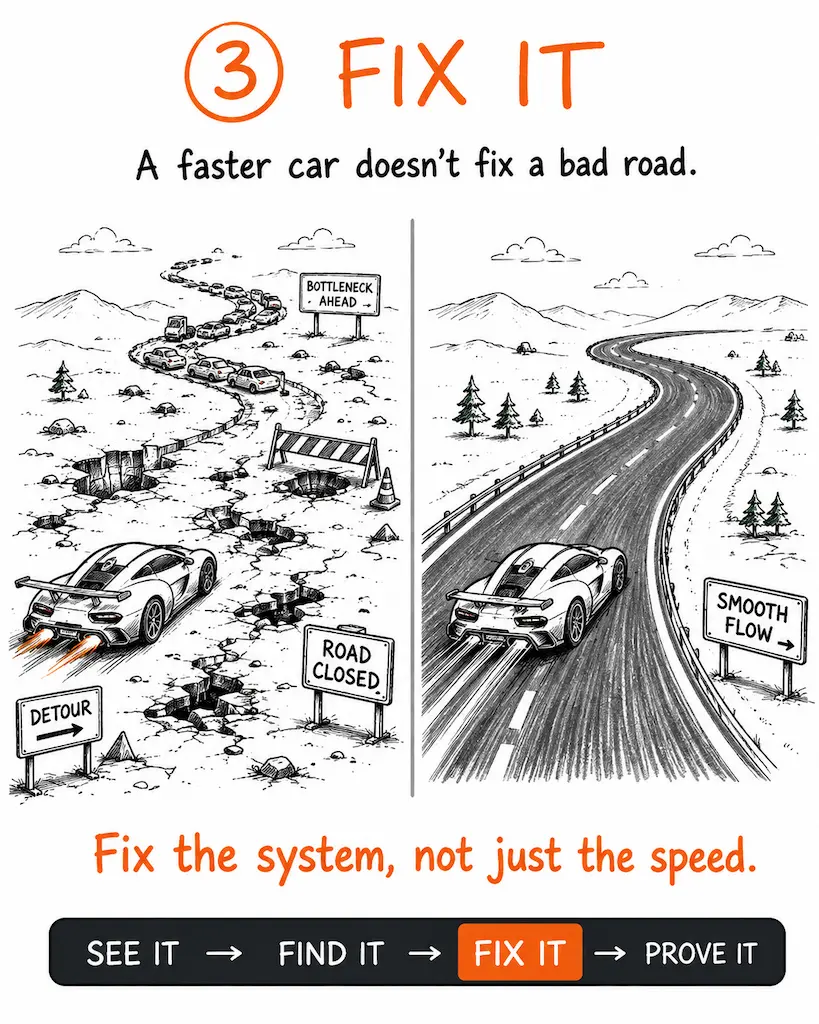
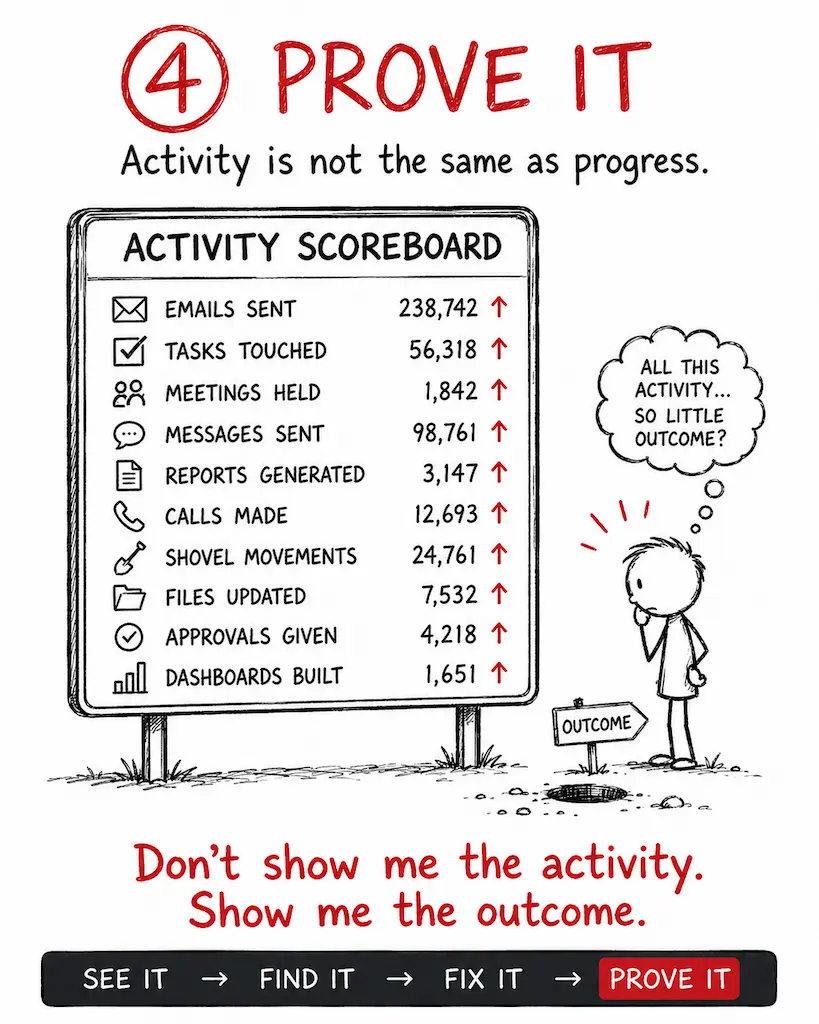
Four steps, each answering one business question. Most organizations start with See It and Find It.
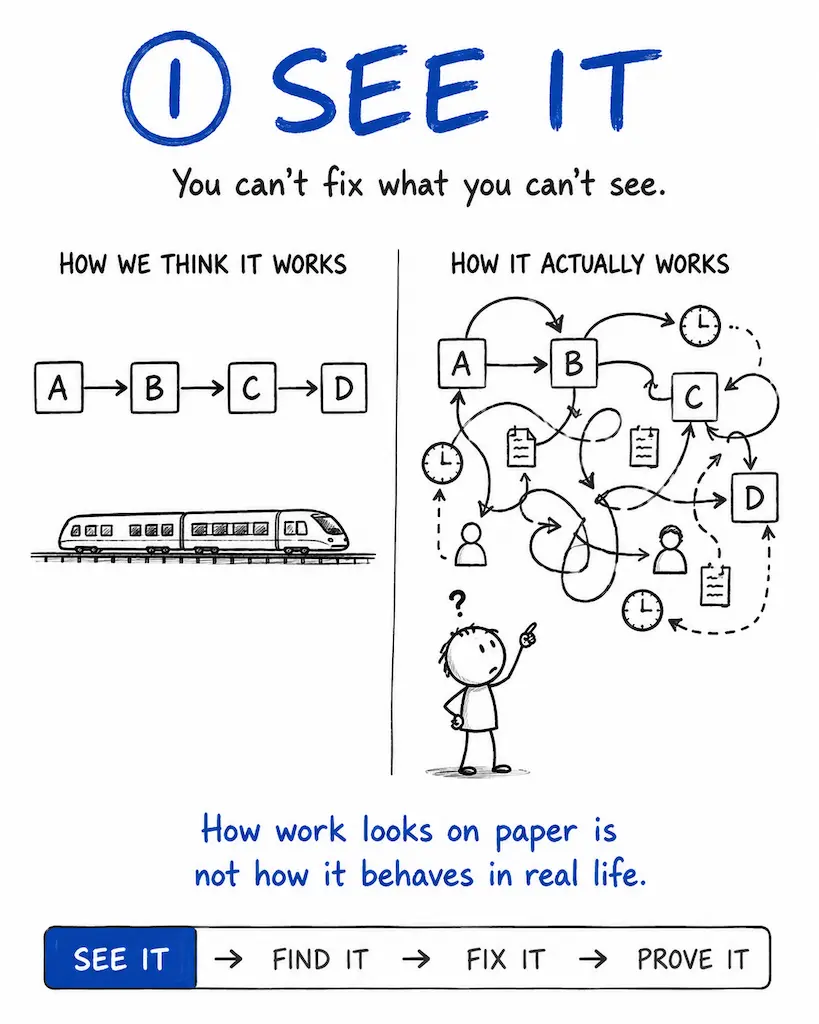
See It
We make the real operating picture visible: how work, information, decisions, funding, and dependencies actually move from idea to outcome.
What ICON Does
We build an evidence-based view of your value stream as it actually runs, not how the process document says it should run. That means the waits, the handoffs, the rework loops, the approvals, the queues, and the hidden coordination costs crossing team and org lines. If you've layered AI into part of the system, we also show where that speed hits a wall the rest of the organization can't match.
Where does value actually move, wait, loop, or get stuck?
This is your baseline. It shows exactly where time, capacity, and investment disappear without moving the outcome forward, so leaders have something concrete to fix instead of a hunch.
Who Needs a Value Stream Diagnostic
Leaders who can see the symptom but not the cause.
CFOs and COOs
You're funding the capacity but can't see where it goes, or why a bigger budget hasn't made delivery faster.
Transformation Leaders
Teams adopted Agile, but work still stalls at the portfolio level, in funding, approvals, and dependencies between groups.
CIOs and CTOs
Your AI and automation investments made individual steps faster, but time-to-market didn't move.
Results From Value Stream Work
Results are drawn from published ICON case studies, not industry averages.
Guided by Platinum SPCT Coaches
ICON is a Platinum SPCT partner and Broadcom Partner of the Year 2025. The coaches who lead value stream work have run it across healthcare, financial services, insurance, and retail.
See It Live
Request a value stream demo. Someone from our team will reach out to schedule a time that works for you.
Thanks for requesting a value stream demo. We'll be in touch soon to schedule it.
Not sure where your value stream is losing time?
Take the 2-minute Agile Maturity Scorecard and see which part of your system to look at first.
Which Diagnostic Fits?
ICON runs two value stream diagnostics. They answer different questions.
| Value Stream Diagnostics & Discovery This page | AI-Powered Value Stream Diagnostic | |
|---|---|---|
| Format | An engagement scoped to one business outcome you choose | A focused half-day session |
| Covers | All four steps: See It, Find It, Fix It, Prove It | See It and Find It, accelerated with AI analytics |
| You get | An evidence-based value stream map, a constraint diagnosis, a redesigned operating model with adoption support, and a before/after economic analysis | An AI-generated flow snapshot, quantified bottleneck analysis, backlog-ready improvement items, and a next-step roadmap |
| Best when | You need the system changed and the value measured | You want a fast read on where flow breaks down before committing to a larger change |
Frequently Asked Questions
A value stream diagnostic traces one business outcome from idea to delivered value and measures where work waits, loops back, or gets stuck. ICON's version goes past mapping: it identifies the constraint causing the delay, redesigns the part of the operating model responsible, and measures the economic value released.
Value stream mapping draws the current flow of work and shows where it waits. A value stream diagnostic uses that map as a starting point, then follows the evidence to the constraint behind the delay, which often sits in governance, funding, decision rights, or org structure rather than in the team where the pain shows up. ICON then redesigns the system around the outcome and measures what the change was worth.
No. Any outcome that depends on work moving across teams can be diagnosed, including funding and approval flows, operations, patient care flow, and insurance claims. ICON has published value stream results in healthcare, insurance, retail, and financial services.
ICON sets a baseline before any change, picks measures that matter to the outcome (cycle time, throughput, cost, capacity, quality, time-to-revenue), and compares the changed system against it. That operational improvement is then translated into economics: working capital, accelerated revenue, avoided cost, capital efficiency, or lower opportunity cost, depending on the business.
The AI-Powered Value Stream Diagnostic is a focused half-day session that uses AI analytics to cover See It and Find It, and ends with backlog-ready improvement items. Value Stream Diagnostics & Discovery is a fuller engagement scoped to one business outcome: it covers all four steps, including redesigning the operating model (Fix It) and measuring the economic value released (Prove It).
With one business outcome you choose, such as a product launch, a claims cycle, or a funding decision that takes too long. Starting with a single outcome keeps the diagnosis concrete and gives leaders a measurable before-and-after instead of a broad assessment.
Fill out the "See It Live" form on the Value Stream Diagnostics & Discovery page. Someone from ICON's team will contact you to schedule a demo at a time that works for you.
Where to Go From Here
AI-Powered Value Stream Diagnostic
Want an AI-accelerated version of See It and Find It in a single half-day session?
Book the AI DiagnosticValue Stream Optimization Consultant
Need a dedicated specialist to run Fix It with your teams?
Meet the RoleSee a Value Stream Case Study
How a major health system improved cycle time by 33% and reduced care delays.
Read the Case Study